Showing posts with label architecture. Show all posts

Wednesday, January 8, 2014

A Day at Wolf Point Club (video)


One of our favorite things is having visitors enjoy playing golf on something that we have designed and built, like in the video above. At Wolf Point our directive was to build something fun for our client to play every single day. It had to be varied, interesting and challenging for him. We didn't concern ourselves about anyone else. But the visitors reactions after playing have been incredible.

We didn't expect comments like this from a recent visitor about their favorite golf experiences from 2013: 

"one of my all time favorite golf experiences was at Wolf Point 
BEST COURSE: Pine Valley is the undoubted winner this year (*Pine Valley is the greatest golf course in the world, according to most). 
RUNNER-UP: Wolf Point which is beating out some tough competition in Sand Hills, Dismal, Ballyneal, Oakmont, Baltusrol and Somerset Hills. 
MOST SURPISING COURSE: Wolf Point" 

We were expecting this comment a little more however: 
"Best Beer on a Golf Course: Wolf Point" 

Because Wolf Point is so private very few people have enjoyed playing here. This video is the first chance we've had to show our work to more than a few people. A good friend Scott Wilson, from Flagstick Films, is the creative mind behind this video. There is more footage and he is compiling and editing his work into a more formal presentation - Stay tuned for more.

Happy 2014!

Wednesday, June 12, 2013

Charles Joachim a mentor and friend


Charles Joachim and I first met over ten years ago when a local golf contractor asked me to GPS map their bunker work at Champions Golf Club.  Charles was the superintendent for 28 years over both courses, Cypress Creek and Jack Rabbit.  During his tenure he was responsible for a USGA Amateur Championship and five PGA Tour Championships.  He oversaw the complete remodel to Jack Rabbit, and improved the Cypress Creek course in countless ways, including resurfacing all the greens - which includes floating out and shaping the huge historic putting surfaces - they average over 10,000 square feet.

Charles office has been a breeding ground for highly successful superintendents.  One very proud accomplishment of his was how he mentored several assistants who have gone on to manage other highly regarded clubs.  He spent so much time teaching and still answers their questions when they could use great advice.

Charles gave me countless tours of Cypress Creek and Jack Rabbit.  We would talk about all the details we could improve and what was the next priority.  I acted part architect and part stenographer when compiling all of our notes over the years.

I am lucky to have had his help away from Champions over the years too, always adding great practical suggestions and lessons learned.  Fortunately we will continue to work together, as he is helping Don Mahaffey and myself on a current Greens renovation project south of Houston.

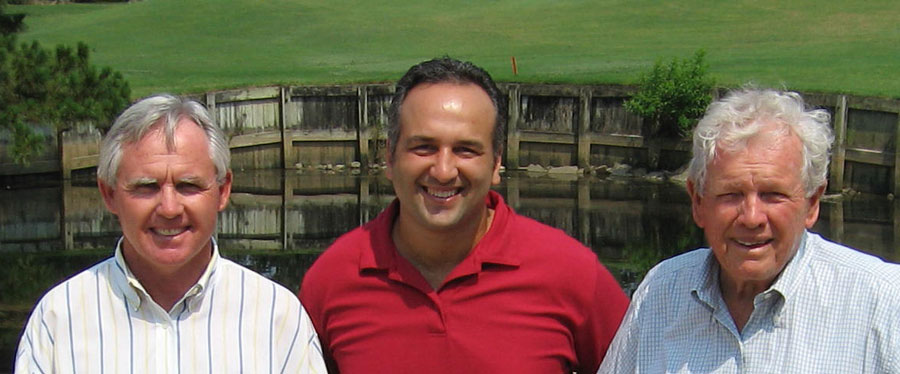
Pictured above is Charles, myself and Mr. Jackie Burke Jr., owner of Champions and the 1956 Masters Champion.  It was hard to tell where Charles ended and Mr. Burke began as they are both full of so much history, golf and business knowledge.

Charles will always be a dear friend.  Thank you.

You can find Charles here on LinkedIn if you'd like some help too:

Tuesday, April 23, 2013

Boston University Engineering Magazine Profile


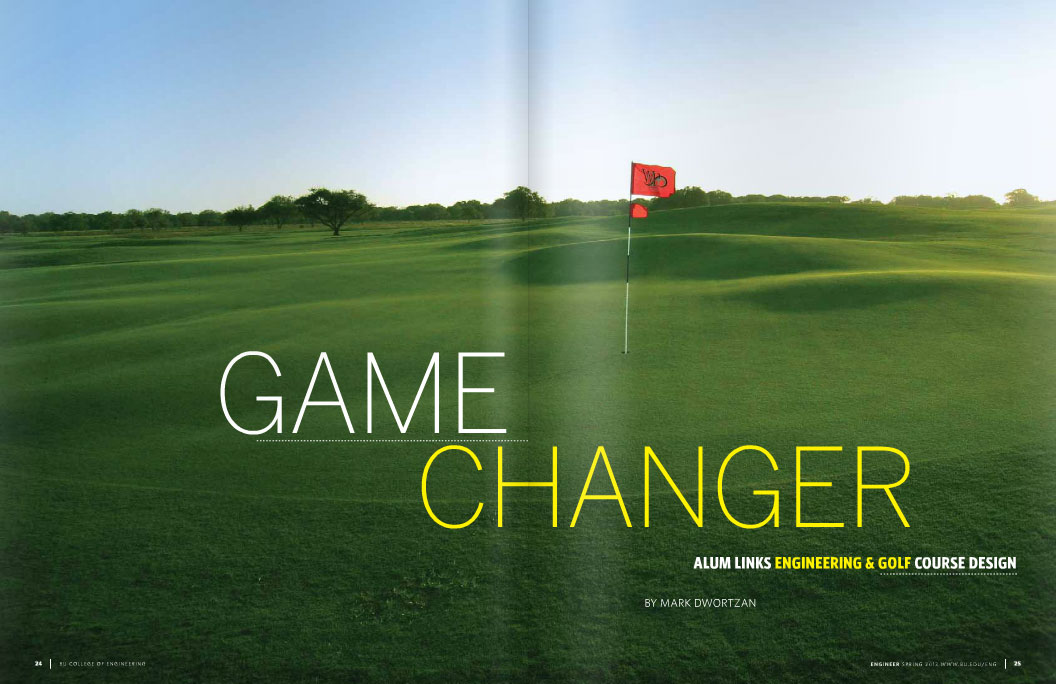
Recently Boston University, my alma mater, profiled my career experiences. I changed majors 12 years ago and have enjoyed bringing my engineering experiences and skills to golf design. Mark Dwortzan, the author and fellow alum, even found the recent mention of Wolf Point in Golf Magazine. You can read the article here: http://www.mnuzzo.com/pdf/ENG_Spr2013.pdf or the whole issue here http://issuu.com/bucollegeofeng/docs/engineer_spring_2013/27 

Thursday, April 11, 2013

Happy Masters Dr. MacKenzie!

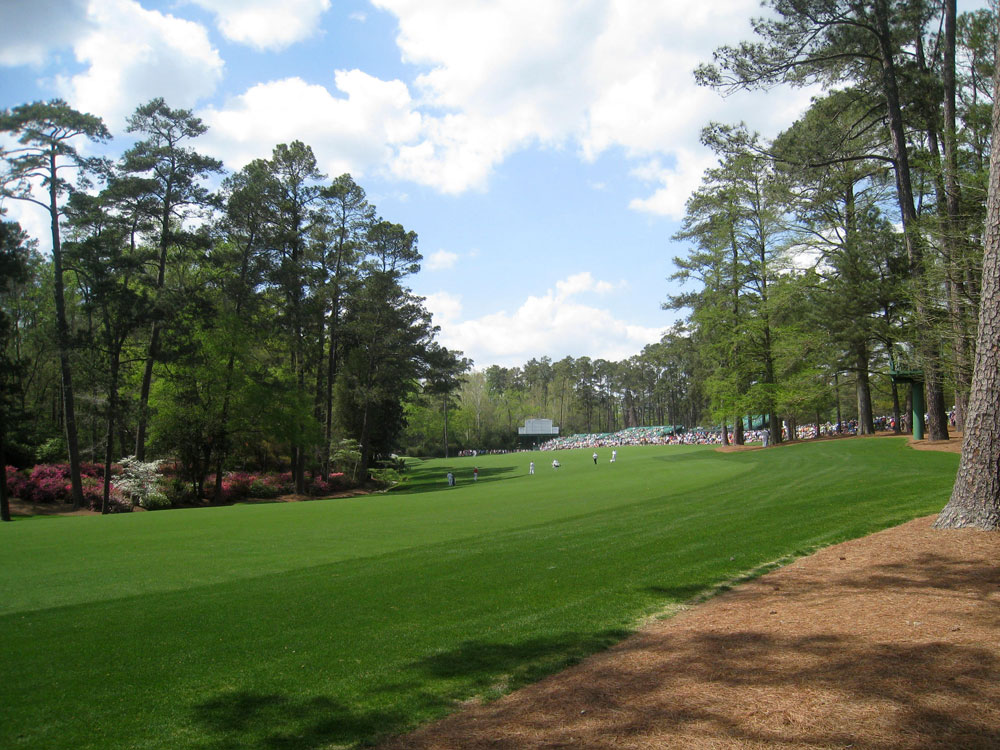
It has been a MacKenzian spring indeed! This week I visited Augusta National Golf Club, home of the Masters for the first time with my father, followed by a round of golf together at Palmetto Golf Club. This visit occurred only 11 days after visiting Melbourne, Australia where I played and studied Royal Melbourne West and East, Kingston Heath Golf Club and Victoria Golf Club. 6 MacKenzie influenced or designed golf courses, separated by 9,825 miles. I have no idea how he did it via ship. I will share more about my experiences and many details about what made all the courses great. Pictured above is one of the best three shot holes in the world, the 13th at Augusta National. For now I hope everyone enjoys this week's Masters, it is a special event and place for sure. Cheers

Thursday, March 14, 2013

Golf Course 2.0

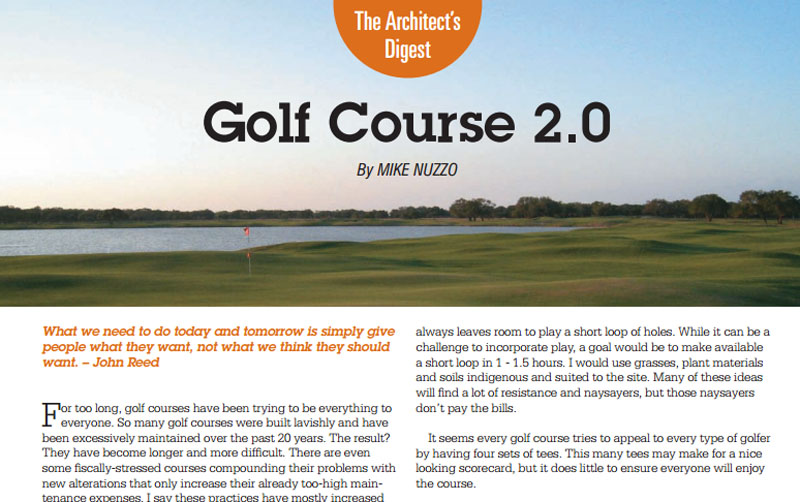
The Architect's Digest in Texas Golfer Magazine:  My most recent essay details a little of what I would recommend for a new course and how to encourage the beginning player to join us for some fun.  Click to read the pdf or the link to the entire digitial issue.


Tuesday, February 12, 2013

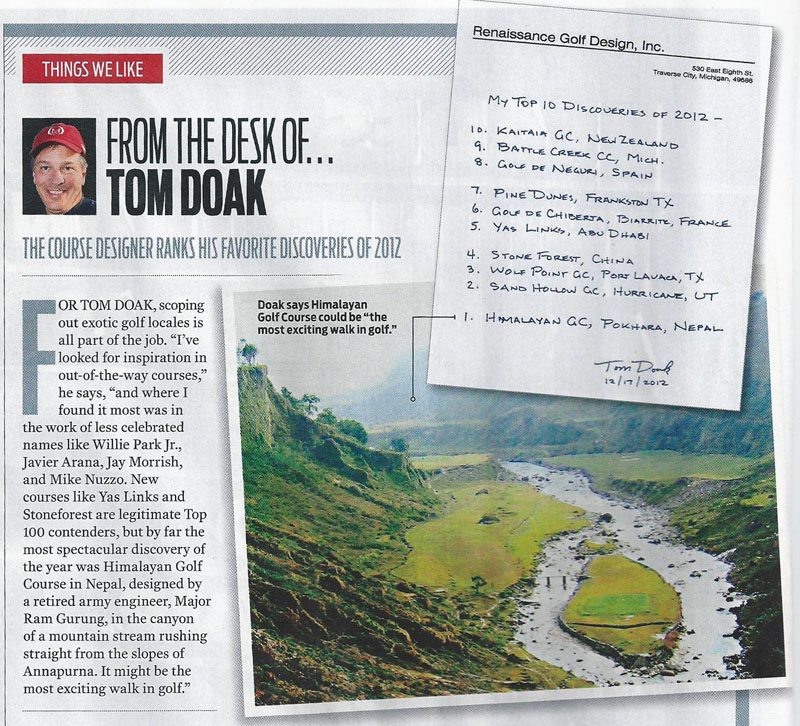
Wolf Point is one of Tom Doak's favorite discoveries of 2012


Great to read this months Golf Magazine.  Above is an article in Golf Magazine (March 2013, pg. 38) by Tom Doak listing his favorite discoveries from 2012.  We are honored to have Wolf Point be a golf course that was worth his travels and studies.  "I've looked for inspiration in out-of-the-way courses, and where I found it most was in the work of less celebrated names like Willie Park Jr., ... and Mike Nuzzo."  You can see Tom travels the globe for work and inspiration!

I'll share more from our round together on a future blog post, I have a great picture of a great shot.
Thank you Tom.

Thursday, December 6, 2012

Golf Club Atlas


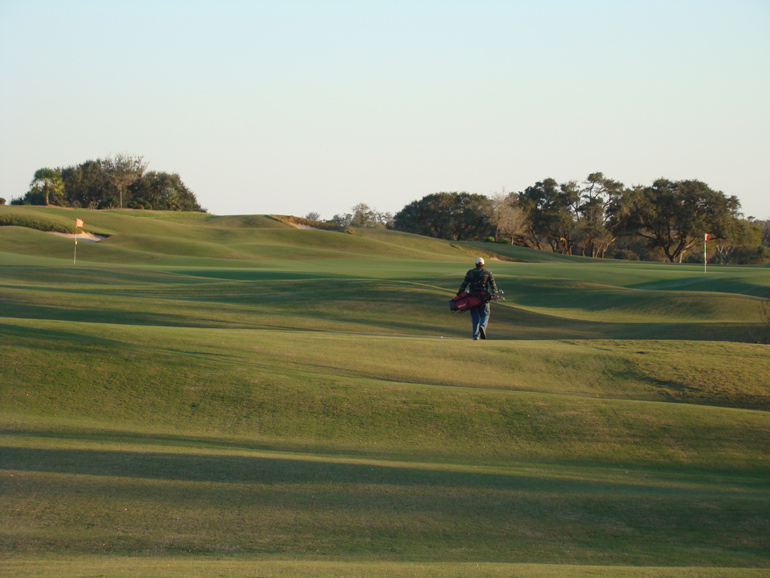
How the ball interacts with the ground is at the soul of good golf. The natural, random land conformations found on links are ideal but skilled artifice is needed for an inland course to enjoy the same playing attributes. In all the world, some of the most graceful man-made contours of the sort that are perfect for golf are found at Wolf Point, a Mike Nuzzo design in Texas. Appreciate the scope of contour in the photograph against the silhouette of Green Keeper Don Mahaffey.


Ran Morrissett, the author of the above quote, started Golf Club Atlas ~12 years ago as a place to share pictures and golf stories with his friends.  It has grown into much more.  He came to visit recently. Wolf Point is currently the welcome picture to his website.  I'll be sharing more in the future about our round and his thoughts on the course.  Cheers

Wednesday, November 28, 2012

Last week The Eden Green at The Old Course was one of the best in the world.


The Old Course at St. Andrews was established in 1552, and has enjoyed the recreational golfer since the early 1400's.  It is a public and publically owned golf course.  On Sundays it becomes a park for anyone to stroll the grounds - pets are welcome too!

Today a fellow player, Colin Donaldson, tweeted the above picture - he shot a 72 amongst the rubble.
The picture is of The Eden green (#11) and is roughly 10,000 square feet – not counting the adjoined 7th green.
I’ve heard, and remember, the slope of the green is more than 4%, or it rises 1 foot for every 25 feet.
To get the slope down to "their" desired pinable level, or more fair?!?, it would have to be reduced to ~2%.
That means if the change in elevation from the front of the green to the back is 4 feet, the back would have to drop 2 feet.

To drop the back 2 feet, it would require almost the entire side to be disturbed.
That is what is happening in the above picture.
They chose a starting point for where the green would need to be cut to achieve the 2 ft drop in the back without looking like a shelf.
The area is large, it appears as if they are disturbing 2,500 sft.
The sod has been cut and removed and placed so it can be replaced and replanted when complete.
They are using a laser to help measure and ensure that the desired slopes are achieved.
It is a usually slow process.
I assume they would also need to adjust the irrigation line and lower the surrounding irrigation sprinklers.

Why does this matter?
Last week this was one of the coolest holes in the World, now it is a little less unique.

You can follow us on twitter for now and we’ll be posting more about this greatest of holes.
It is too late, but still informative: #Savetheoldcourse.

Friday, August 10, 2012

Wolf Point with PGA Championship fairways

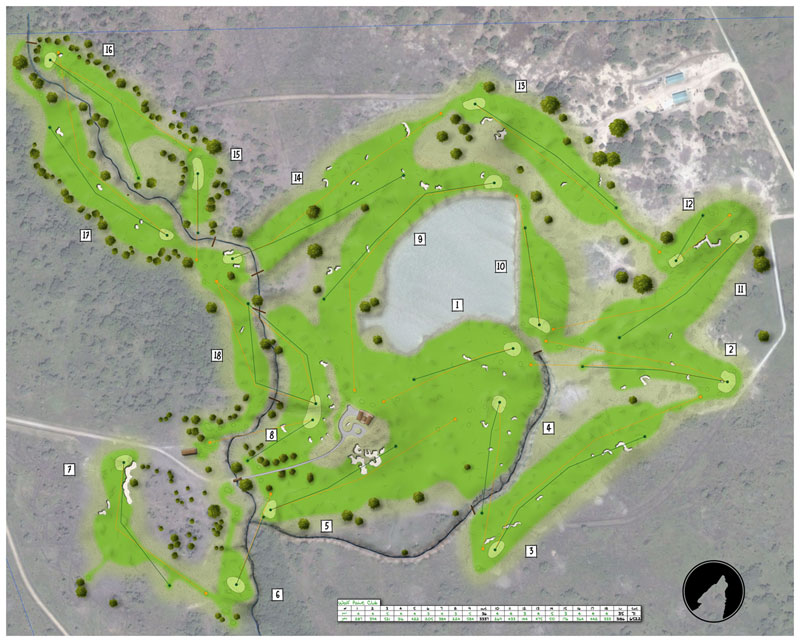
Earlier this week we shared how Wolf Point Club has three times as much fairway as this week's PGA Championship course, The Ocean Course at Kiawah.  One would have to hit a bad shot to miss that much fairway at Wolf Point.  Often the average player may hit every fairway from the tee.  What they don't know is that one can hit the fairway, and it still may be a bad shot. When their location in the fairway doesn't allow a chance to aim at the day's hole location, or if one does try from the wrong angle it will wind up even worse if not perfect. 

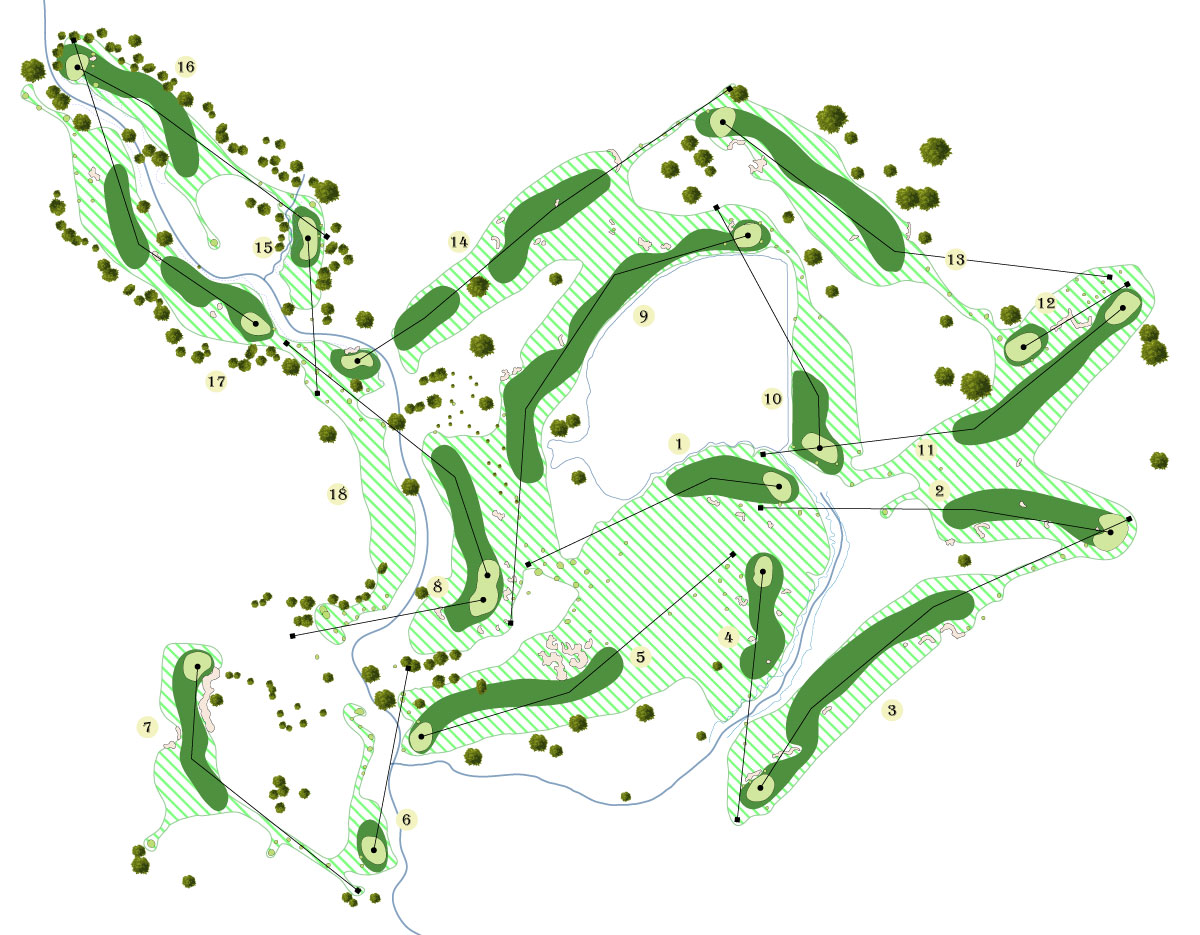
The picture below is what Wolf Point would look like if the USGA or PGA got their hands on the setup of the course.  They both like narrow fairways that challenge the driving accuracy of the pros.  The striped areas are the fairways as designed and maintained.  The dark green fairways are how the course would look with 28 acres of fairway - the same as this week's PGA.  It may not be obvious, but the average player certainly wouldn't hit 1/2 as many fairways.

What we don't like about the USGA & PGA's methodology is that they have to change the existing golf course to suit their needs, even though big fairways do challenge the best players, as long as the greens are well designed.


Tuesday, August 7, 2012

Three times as much fairway as the PGA Championship

This week the PGA Championship is being contested at The Ocean Course at Kiawah.  It is a very good golf course and certainly challenging, especially with so many angled fairways.  The course has 28 acres of fairway, not always easy to hit, and in my opinion way too tight for the average player.

When I tell people about Wolf Point, I describe the course as fairway everywhere.  When I say we have over 84 acres of fairway, the average player has no idea what that means.  It means we have three times as much fairway as a "Championship" golf course.

How does that effect a game a Wolf Point?  It means you can keep playing, instead of fighting off alligators, in stead of looking for your ball.  It certainly doesn't mean it is easy.

I would like to know if any golf course in the world has more fairway than Wolf Point?  I doubt it.  

*Later this week I have an illustration of what our course would look like with 28 acres of fairway.


Thursday, July 26, 2012

From the space race to a cattle ranch.

From the space race to a cattle ranch. The amazing story of a designer who is reshaping the rules. 

The title of this blog is the introduction to a published profile about my past and our current work.  One never knows what a reporter is writing when talking over the phone, but Shaun got pretty close.


"Wolf Point is a fast-running teaser that brings to mind the best that the great old links can conjure up."  

"But the silver lining in this raincloud is that Mike Nuzzo has been unearthed.  A designer who brings a progressive practicality to the table and does so with great success."  


Click this link to read it in its entirety.


Tuesday, June 26, 2012

Speaker on Affordable Golf

I've been asked to speak and share my experiences at the Symposium on Affordable Golf this fall.  Specifically I'll be describing how we built so much great golf at Wolf Point for an incredibly low price.  The symposium location is very cool: Pinehurst.  This is the third year that Richard Mandell has hosted this grass roots event.  Here is the website:  http://www.symposiumonaffordablegolf.com/.  
Please fill out their survey: http://bit.ly/golfsymposium.


Some highlights from the Agenda:

2012 Symposium On Affordable Golf Agenda Complete 
The third annual Symposium On Affordable Golf will once again be held at the Southern Pines Golf Club in Southern Pines, North Carolina on Monday and Tuesday, October 29th and 30th. This year, the Symposium will be one and a half days, followed by a golf outing on the Donald Ross-designed Southern Pines Golf Club Tuesday afternoon.

The Symposium On Affordable Golf raises awareness and understanding of the challenges of the golf industry through open discussion, exchange of ideas and highlighting successes that promote the health and sustainability of the game of golf. As in previous years, there is no fee for attendance. Also, as in past years, members of the PGA, the LPGA and the GCSAA will be eligible to receive continuing education credits. 


There will be three case studies detailing successful and affordable golf operations, each from different regions of the world. Other topics include "The Curious Case of the Taj-Mahalics," "Let's Start Romancing the Game Again Instead of Selling the Business," and "Where Sustainability and GolfSpeak Intersect."


The picture below is the last time Rich and I spoke together.  That is Pete Dye's son, Perry, to our left.


Tuesday, June 12, 2012

Golf Club Atlas Next 50

By design Wolf Point Club hasn't shown up on any magazine best lists, top world or anything similar.  A number of our friends are magazine panelists and have even enjoyed an escorted round with us.  But they have all been instructed to never submit any ratings of the course.  A few journalists have also played with us, the big magazine architecture editors have not.  I guess if they can't add it to their list Wolf Point is of little interest.


There is one list that Wolf Point did appear on a few years ago.  My friends Ran and Ben at GolfClubAtlas.com added our course to their Next Fifty list.  These are the courses they'd most like to see.  "We have not yet played the following but hope to profile them sooner rather than later."


Back in 2009 our work showed up at #8 with a promise to visit soon.  I just recently noticed that we jumped to #4.  (see below).  Even nicer was that the few that we passed haven't been crossed off their list, but just bumped lower.


Ran and Ben have been busy of late.  Here is hoping they get a chance to appreciate our work sooner rather than later.  I think they will find it unique for a number of reasons.


Cheers


Monday, June 4, 2012

An interesting putting green

In designing a pair of practice putting greens for a public course, I drew a set of green surfaces that included interesting, yet subtle contour. I was asked to redraw the green contours to be simple sloped planes to match those on the course.


It is a valid request, but these putting greens are where the new player will first meet the golf course, or maybe any golf course.  I'd rather it be an interesting meeting.


Their request inspired me to compose this quote: 


One neat element of a creative putting green is you can always find a straight or flat putt on one, but the converse is not true. 
You can never find a creative putt on a flat green. 
 -- Mike Nuzzo


The following videos, while very cool, show how predictable a flat planar surface can be:


Tuesday, May 15, 2012

Features and topography before a first site visit

I am visiting a new client this week. The project is to rebuild a green complex later this year, and look at some tee options. The course is 60 years old and has several different styles throughout. 


Prior to my visit I was able to compile a Google aerial image and recreate all of the golf features - greens, tees, bunkers, ponds & fairway. This is probably the most accurate set of feature areas in the courses history. I can now easily calculate the square footage of each green, tee, bunker...


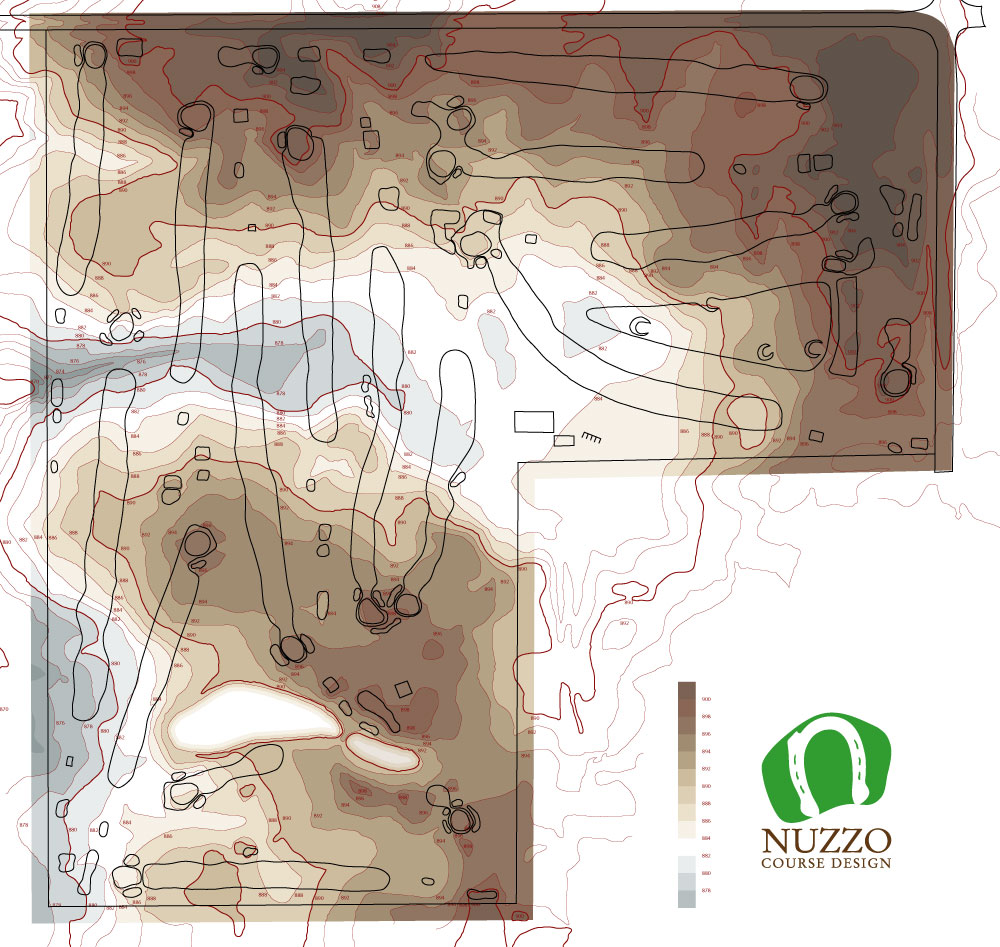
The superintendent also shared an available county topographic website, which I was also able to compile and chart. Above is the illustration I can bring to my first site visit to begin working on a specific problem and also start to work on a long term master improvement plan.


Every piece of information is now in one file and I will make any site visit notations or future design changes in this same file as well - everything will always stay associative.  Drainage, irrigation, earthwork, cart path or anything mapped via GPS.


As for the topo, the darker the brown the higher the elevation, the darker the grey, the lower. It is now easy to spot the valley along with the high and low spots throughout the course.


Research, facts and preparedness makes for a much easier site visit and better results.

Monday, June 6, 2011

An e-mail from a visitor about playing golf at Wolf Point Club

i think you achieved something truly important out there in those fields i didn't really understand it until we completed the first 18 holes and went around the house to tee off on number one the second time standing there, i saw the hole, which i did not understand the first time i played it, in a new light we are so accustomed to playing, and seeing, courses that are manufactured according to preconceived ideas of what a course should be here's the hole it's defined by trees or hummocks or water on it's sides there are obstacles near where our shots will probably land it ends in that hollow or on the flattened rise hit to position a, then to position b etc

so, teeing off on number one the second time i got it a little this is what it would be like to take a "found" landscape and play golf on it with many, many ways to play the hole, depending on your imagination and skill

i won't do a hole by hole

some things which are indelible
the topsy turvy swale in front of five green the psychedelic green on the long par five 14 the green and surrounds on three never mind there are amazing things on nearly every hole

but...

the subtle green sites on 4 and 13
which feel like someone draped smooths blanket on gentle hillsides sorta like "let's play to over there" to the side of that hill even though "over there" would be flattened by a succession of committees to make it more "fair" on any other golf course two genius green sites more so as you made them up

and the inspired bunkers
on the diagonal ridge in front of the third green and the erosion gully on the left of twelve i know you made these, too but they are the most natural feeling features i've ever seen on any golf course i felt like i was on some primeval landscape for the first time thinking this would make a great place to play a game with some clubs and a ball from here to there what should we call it?

i never had a more enjoyable time playing golf

the variety of shots required
and the variety of shots that were possible strategy blah blah you got that, too

you should be proud for having accomplished something remarkable i think back to places i've played where i was really happy beautiful places where life seemed in balance bandon pebble and wolf point more often than others

thanks

Wednesday, February 2, 2011

Tiger's Dubai Desert Project, Al Ruwaya, and first NLE - Part 2

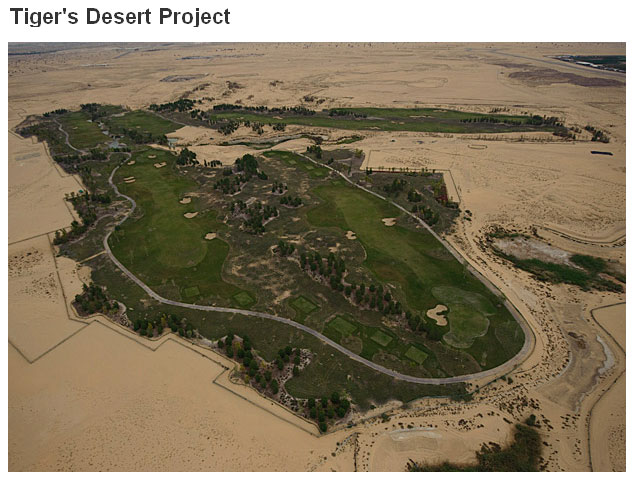
I remember the copy on Tiger's original design web site.  He said he wanted to create amazing golf courses - it has since been edited.  The hole pictured (Golf Digest pictures) above is a par 5 with 6! tees.  I can imagine it is very windy at times and that might be reason for extra tees, but I doubt it.  The 2nd & 5th tees are totally superfluous - who are those for?  Some of the best holes and courses in the world have just 2 sets of tees.  On to playability:  The first shot should stay left of the fairway bunkers - but doesn't look like it matters - because the 2nd shot will just find the fairway too with little advantage for attacking the green - the angles are too narrow.  The bunker in front of the green may be a nice touch and give the few people in the world who can reach the green in two some concern.  Everyone else will try to hit the fairway twice then the middle of the green.  This hole is not memorable - nice - but certainly not memorable - I wouldn't call it amazing, unless spending more money on a golf hole than any other on the planet is part of the criteria.  They do get a point for not making lacey edged bunkers that are so in vogue these days - they are clearly Fazio bunkers though - using one of their shapers is my guess.


The previous hole, a par 4, looks like store brand vanilla ice cream. A tee shot between two bunkers to an angled green.  That's it.

I'll guess the grass is Paspalum - a warm season grass that does well in high salt environments. The water comes from a desalination plant - this lush vegetation requires a LOT of water. Golf courses do best - look and play - when they blend into the native environment. The course isn't fighting nature and it looks like it fits.


I have one last picture to describe for tomorrow.

Tuesday, February 1, 2011

Tiger's Desert Project, Al Ruwaya, and first NLE

Tiger Wood's first golf course design project was being developed in Dubai. As of yesterday it was announced that the project was cancelled. NLE = No Longer Existing, and it is usually the term when an old golf course closes - there have been a few notable modern ones in recent years. I thought it would be interesting to analyze the course architecturally speaking. From Tiger's website: Par 72 championship-quality course. The vision for Al Ruwaya Golf Course is to transform the blank canvas into a unique golf course that rivals any in the world.

Tiger teamed up with a former Fazio associate to create his design firm. (That former associate also has his own firm with no mention of Tiger on their website.) The following are my assumptions.

The project was to sell about $1 Billion dollar's of real estate. With that as the goal you can rationalize almost anything - like a reported $10-20 million design fee - but it is all still a guess for the owners. One of Fazio's most famous and successful golf course designs is Shadow Creek in the desert outside Las Vegas. I believe the cost for construction was over $40 million dollars. I assume this was the model for Al Ruwaya - to create an oasis.

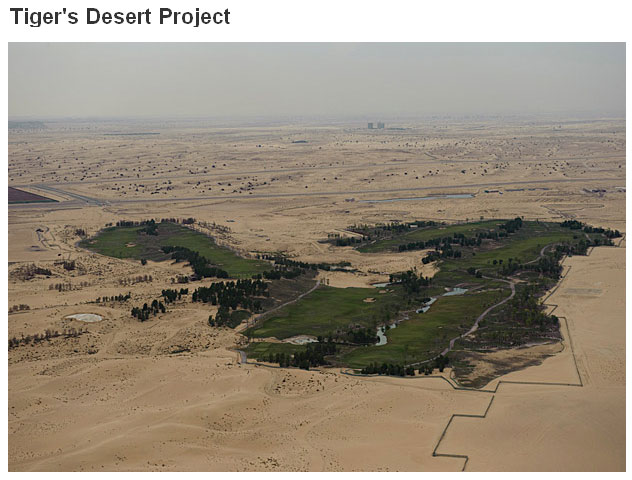
Pictured above is an image of the project from Golf Digest. I see a very densely vegetated area = a lot of water too keep everything alive. There are 5.5 holes constructed with grass. The hole corridors appear to be somewhat wide between holes - there looks like as much to irrigate outside the hole as the hole itself - which translates to at least twice as much maintained area for non-playing surfaces - you can irrigate a lot less around tees until you get to the fairway. That is very expensive and doesn't effect the playability of the hole.

There appears to be some shaping in the fairways - not just surrounding the hole - they get a point for this work. And they get another point for keeping the holes together - not every hole is lined with houses. But they loose that point quickly with the distance between greens and tees - not that anyone will walk here, but there is no need to separate when a good angle will do just fine.

I am thankfully keeping busy with my own work - this post was written during a break - so I'll get to more in the next day or two.
Cheers

Thursday, August 26, 2010

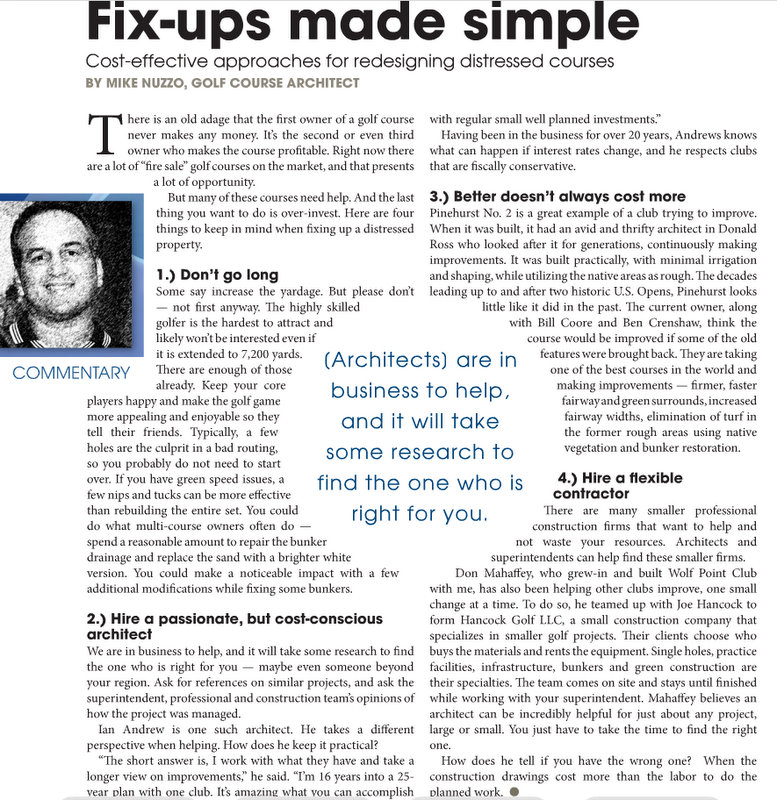
Fix Ups Made Simple


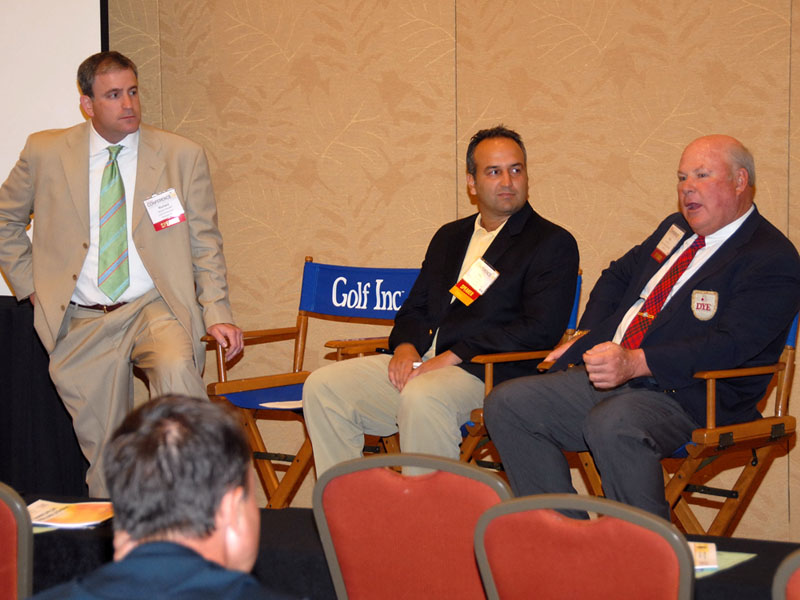
The Summer's Golf Inc issue arrived this week. Inside is an article I wrote with the help of a couple friends. Don Mahaffey, our project superintendent and Ian Andrew a fellow architect from Toronto. Both have had many years of great experiences helping clubs improve - even with practical budgets. I believe we can make any course more fun, often inexpensively.

I wrote the article after hearing anecdotal stories about new owners of bankrupt golf courses who hired architects that subsequently put forward grand plans to make the course get on the top magazine lists. Why waste a million dollars to be the 7th best course in a city? There are better ways to improve a golf course - with both the player and owner in mind - not just to improve the architect's accolade web page.

Here is the link to the Golf Inc. article

Tuesday, June 8, 2010

City of Laredo Golf Course


The City of Laredo recently selected 5 design/build teams to interview for their planned municipal golf course. Here is the article. Unfortunately we were not selected as one of the finalists.

What was notable about this request for qualifications?
31 teams in total submitted
Each team included a golf course architect and builder - it is a turnkey project including infrastructure and clubhouse.
The initial meeting was standing room only - there were more architects and builders than at the Golf Industry Show.

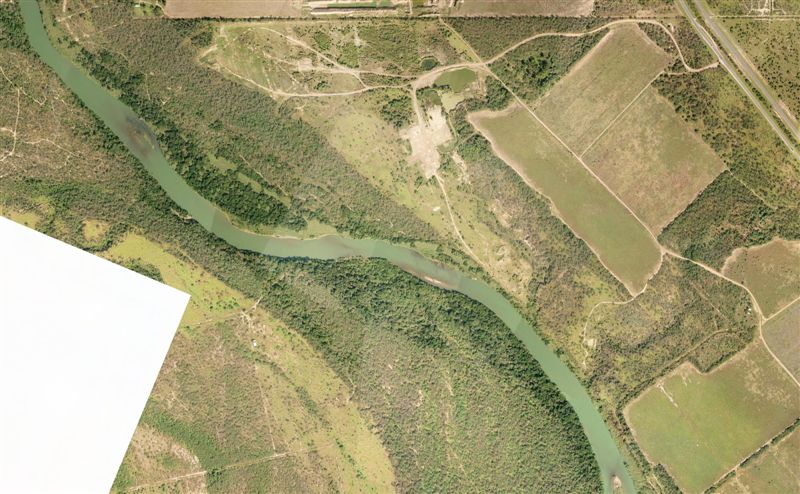
Above is the aerial of the site on the Rio Grande. The property was donated to the city by a local developer. The water rights are essentially free. The city has $6.6 Million to spend on the project - and that was including the bottled water we were given during the site visit - they had no room for over-spending.

It is a very cool site with lots of features - big arroyos, arid vegetation and good materials to build a course.

When the city announced that the $6.6MM included the clubhouse and infrastructure, there was an audible groan from the attendees. Most, if not all, thought it was way too low.

Our team thought it was more than enough. If I write more about the proposal I'll describe how our team was formed -- I think we were the best team for the city.
I wasn't originally going to submit, because of the difficulty in winning a municipal project -- the team was too good to not submit.

Related Posts Plugin for WordPress, Blogger...